


Can an all in one heat pump provide a more reliable hot water supply? For hotels, residential projects, and commercial properties, hot water demand changes throughout the day. Therefore, buyers need equipment that supports consistent heating and practical operation. An R290 all in one heat pump water heater combines a heat pump and water storage into one system. It can help businesses offer an integrated hot water solution.

Can an All in One Heat Pump Handle Changing Hot Water Demand?
Consider a small hotel during its morning rush. Several guests may shower within a short period. Later, demand may fall considerably. This pattern requires careful planning around hot water storage and recovery.
An all in one heat pump can support this demand through its integrated heating and storage design. However, the system must match the property's actual consumption.
How does integrated heating support daily use?
A heat pump transfers heat from surrounding air into water. Its compressor supports the heating cycle. Meanwhile, the storage tank keeps heated water available for later use.
This arrangement helps separate water heating from immediate consumption. As a result, users can draw stored hot water during busy periods.
The product also highlights faster heat exchange. This feature can support the water-heating process. Actual recovery time still depends on operating conditions and system configuration.
Does an R290 Heat Pump Suit Different Commercial Projects?
Different properties have different hot water patterns. For example, apartments often experience morning and evening peaks. Hotels may need a broader daily supply. Small commercial buildings may have more predictable usage.
Therefore, an R290 heat pump water heater should match the property's demand profile.
What should buyers assess before selecting capacity?
Start with the number of users. Then estimate daily hot water consumption. Also consider peak demand and the required water temperature.
A properly selected all in one heat pump can support a more organized hot water plan. However, buyers should confirm tank capacity and heating output before ordering.
| Selection factor | What buyers should check | Why it matters |
|---|---|---|
| Storage capacity | Tank volume and user demand | Supports peak-period consumption |
| Heating performance | Rated heating capacity and recovery time | Helps estimate supply availability |
| Operating conditions | Ambient temperature range | Affects site suitability |
| Installation space | Unit dimensions and clearance | Supports practical placement |
| Control functions | Temperature settings and protection | Helps manage daily operation |
| Refrigerant | R290 specification and documentation | Supports product and compliance review |
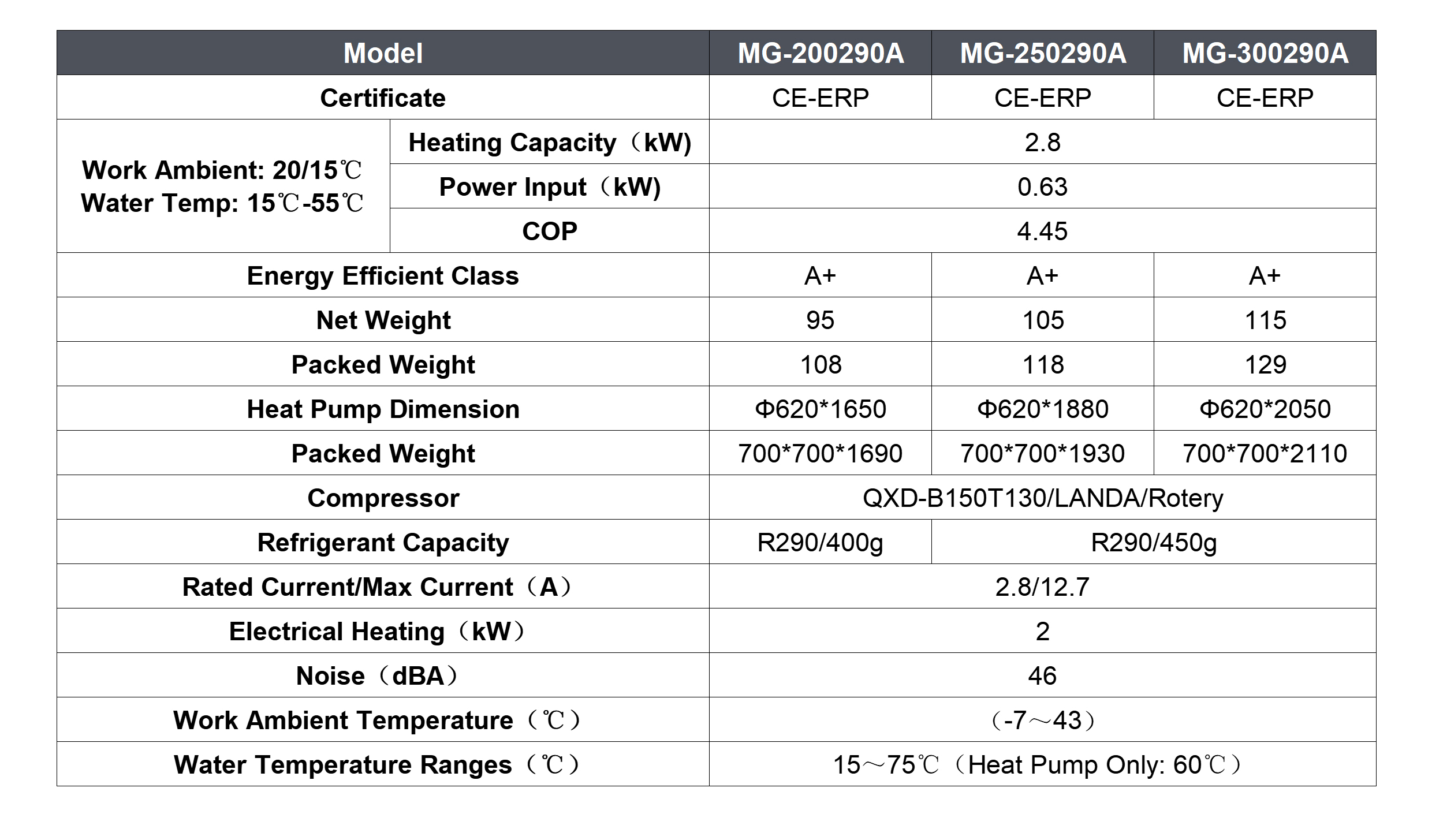
The product page identifies a high-efficiency compressor. However, it does not publish complete performance figures. Buyers should request rated capacity, COP, and operating temperature data for accurate project planning.
Can Solar Power Improve an All in One Heat Pump Solution?
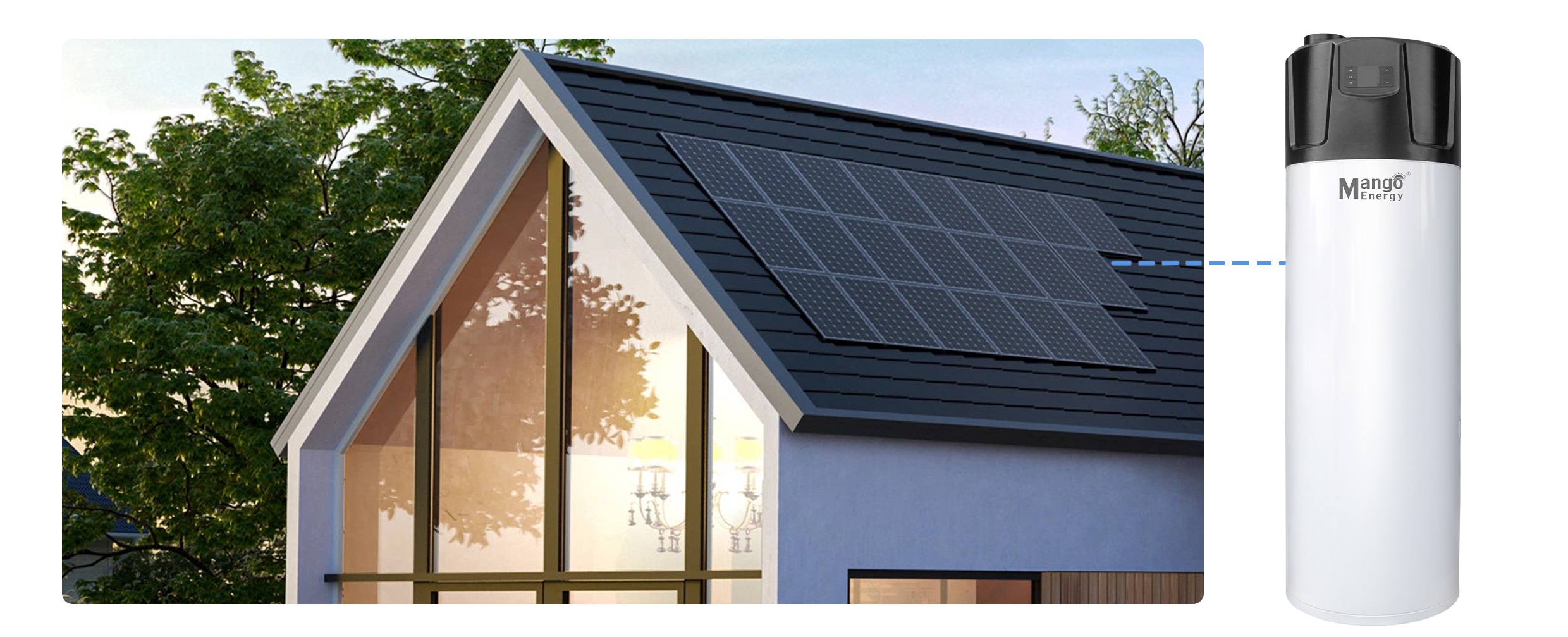
A property with a photovoltaic system may have another energy option. For example, a hotel could generate electricity during daylight hours. The building may then use available solar electricity to support its energy needs.
An all in one heat pump can form part of this wider energy strategy. However, the actual benefit depends on system integration and electricity availability.
How does a PV-supported water heating setup work?
Photovoltaic panels generate electricity from sunlight. The electricity can then power compatible equipment, including a heat pump.
This differs from solar thermal water heating. Solar thermal systems use solar radiation directly to heat water. PV systems generate electricity first.
The product information highlights PV system compatibility. Therefore, project planners can explore how the heat pump fits existing solar infrastructure.
However, buyers should confirm electrical input requirements and control compatibility. They should also assess local sunlight conditions and daily hot water demand.
What Makes an All in One Heat Pump Practical for B2B Buyers?
For distributors and project contractors, product quality matters alongside purchase price. They need equipment that fits customer requirements. They also need clear technical documentation and dependable supplier communication.
An all in one heat pump offers an integrated product format. This can simplify product selection for projects seeking combined heating and storage.
What should distributors confirm with manufacturers?
Before placing an order, request the complete technical specification. Check the tank material, insulation, compressor details, and safety protections. Also confirm the warranty and available replacement parts.
| Commercial consideration | Recommended confirmation |
|---|---|
| Product quality | Material details and quality inspection process |
| Performance | Rated heating capacity and COP test conditions |
| Safety | Electrical and pressure protection details |
| Compliance | Applicable certificates and test reports |
| Customization | Available configurations and branding options |
| After-sales support | Warranty terms and technical assistance |
These checks help distributors assess product value. They also make quotations easier to compare across projects.
For businesses developing a heat pump product range, supplier support matters. A responsive manufacturer can help clarify configuration choices. In addition, clear documentation supports smoother communication with installers.
Explore our heat pump product range to review available heating solutions.
How Can Businesses Plan a More Reliable Hot Water System?
A reliable hot water project starts with realistic demand calculations. First, estimate daily consumption and peak usage. Next, assess the installation environment and available power supply.
Then, select a suitable all in one heat pump configuration. Avoid choosing capacity based only on the building's floor area. Instead, consider the number of users and their consumption habits.
For example, a guesthouse may need sufficient stored water for morning showers. A staff facility may have more regular usage throughout the day. These different patterns influence tank selection and heating schedules.
Finally, request performance data under relevant operating conditions. Confirm the expected recovery time and installation requirements. This process helps businesses balance product quality, energy planning, and investment costs.
Visit our technical guide for further information about heat pump selection and system planning.
Q&A: All in One Heat Pump and Hot Water Supply
Q1: Can an all in one heat pump provide hot water throughout the day?
It can support daily hot water demand through integrated heating and storage. However, supply depends on tank capacity, heating output, and consumption patterns.
Q2: What is the advantage of an R290 all in one heat pump?
The product uses R290 refrigerant. Buyers should review its technical documentation and confirm suitability for their target market.
Q3: Can an all in one heat pump work with a PV system?
Yes, a compatible heat pump can use electricity generated by photovoltaic panels. Confirm electrical and control compatibility before installation.
Q4: Is this product suitable for hotels and commercial buildings?
It may suit projects requiring integrated water heating and storage. Buyers should calculate peak demand before selecting the system capacity.
Q5: What information should distributors request before purchasing?
Request rated heating capacity, tank volume, COP, operating range, certifications, and warranty details. These specifications help assess project suitability and purchasing value.
Q6: How can businesses obtain a suitable wholesale solution?
Share the target market, application, expected demand, and installation conditions. The supplier can then help identify a suitable configuration and provide a project quotation.