


Can air source heat pumps keep swimming pools warm throughout the year? The answer depends on climate, pool design, and heating capacity. Understanding heat pump air to air technology also helps buyers evaluate how outdoor heat transfer differs from direct pool water heating. For hotels, spas, fitness centers, and pool operators, the right air source pool heat pump can support comfortable water temperatures and practical operating costs.
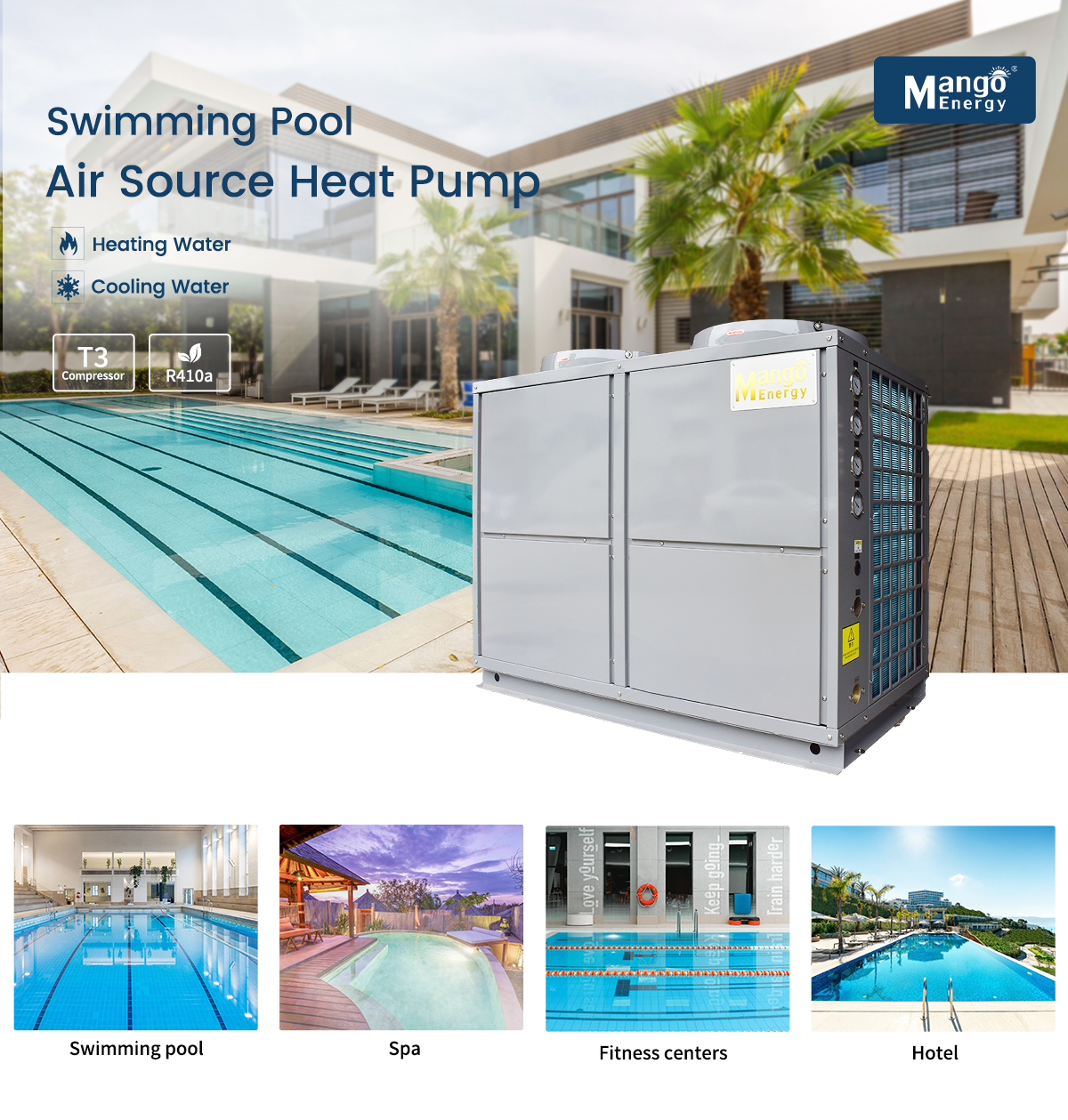
Mango Energy's Aqua Series pool heat pumps use air-source technology to extract heat from outdoor air. They transfer that energy to pool water through a dedicated heat exchange system. With heating capacities ranging from 15 kilowatts to 126 kilowatts, the series serves a range of commercial pool applications.
Can Pool Heat Pumps Maintain Comfortable Water Temperatures Year-Round?
Match heating capacity to climate and pool demand
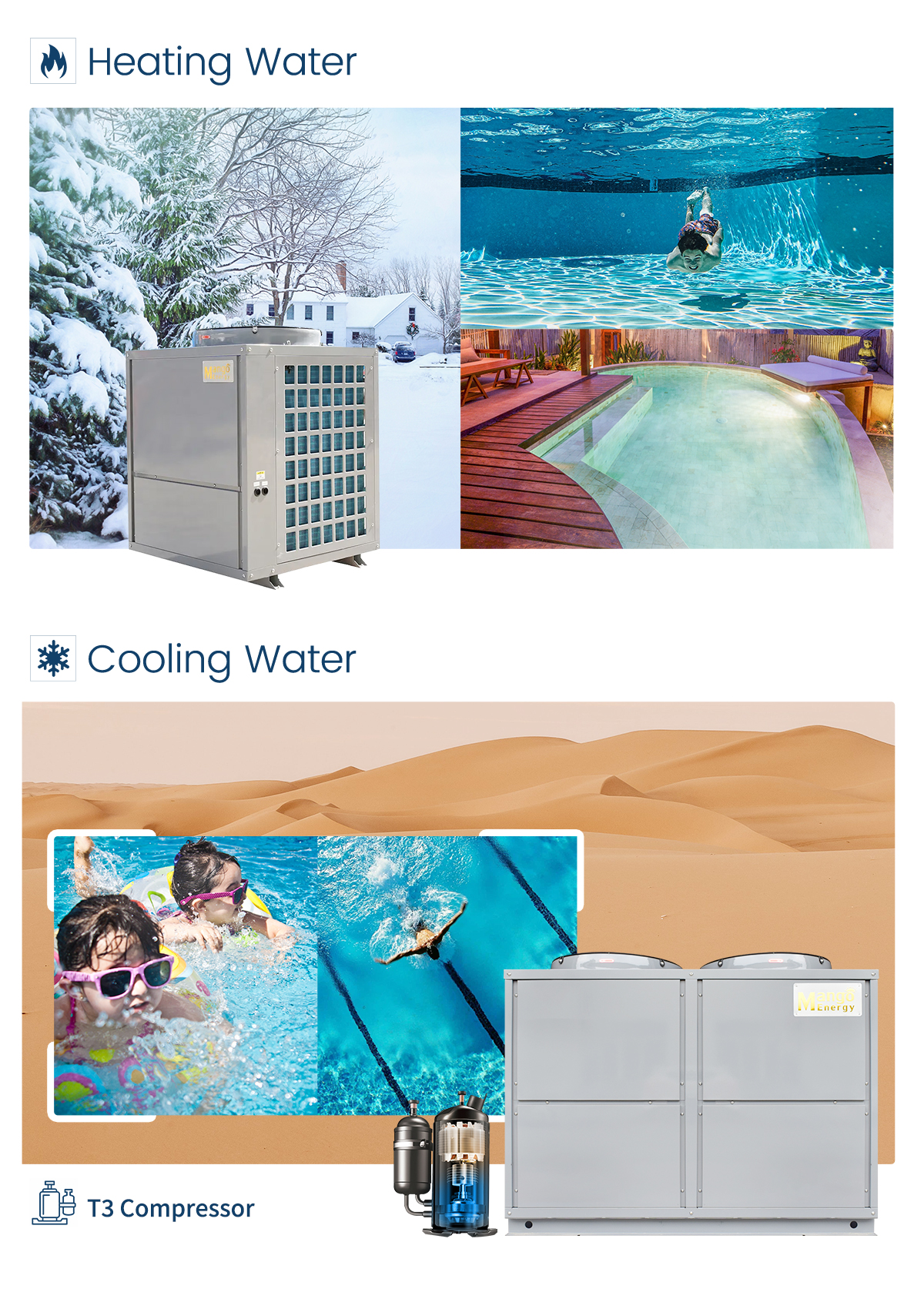
Outdoor temperatures influence how much heat an air source heat pump can extract. Therefore, performance may change between mild spring weather and cold winter conditions. Pool size, wind exposure, and desired water temperature also affect heating demand.
The Aqua Series supports a stated temperature range of 5 to 50 degrees Celsius. Buyers should confirm whether this refers to the operating ambient range or another specified temperature parameter. The supplier should clarify this point before project selection.
For year-round use, operators should assess local winter temperatures and expected pool occupancy. Additionally, pool covers can reduce heat loss when the pool is not in use. Proper insulation and suitable circulation also help maintain stable water conditions.
Consequently, choosing the correct heating capacity requires more than comparing pool volume alone. A professional heat-loss calculation can help determine the required output for each location.
Explore our Commercial Pool Heat Pump Product Range to review available heating capacities.
How Does Air-Source Technology Heat Pool Water?
Understand the heat transfer process
A pool heat pump extracts thermal energy from outdoor air. Its refrigerant absorbs that energy and moves through a compression cycle. The system then transfers heat to circulating pool water through a heat exchanger.
Although buyers may search for heat pump air to air systems, pool heating uses a water-side heat exchanger. This distinction matters when selecting equipment for a swimming pool. An air-to-air heat pump generally heats indoor air, while a pool heat pump transfers heat into water.
The Aqua Series uses Emerson Copeland scroll compressors and matched axial motors. These components support the system's heating process and airflow. However, buyers should request rated coefficient of performance data to evaluate efficiency under specific conditions.
Moreover, actual energy consumption depends on outdoor temperature, target water temperature, and operating hours. Therefore, project estimates should use verified performance figures rather than general efficiency assumptions.
Will Pool Water Chemistry Affect Equipment Durability?
Choose heat exchange materials for pool environments
Swimming pool water contains treatment chemicals that can affect metal components over time. Consequently, heat exchanger material deserves careful attention during procurement. Equipment should suit the pool's chemical conditions and recommended maintenance practices.
The Aqua Series features titanium alloy heat exchangers. This material offers strong resistance to corrosion in many pool heating applications. It can therefore support long-term equipment value when operators follow appropriate water chemistry guidelines.
However, buyers should confirm the exact titanium grade and permitted water chemistry range. Saltwater pools may require additional compatibility checks. Regular inspections and balanced water chemistry also help protect connected equipment.
For technical selection guidance, consult our Pool Heat Pump Technical Guide before finalizing your specification.
How Can Commercial Operators Control Heating Costs?
Balance system sizing with daily pool use
Hotels, spas, and fitness centers often maintain pools for extended operating hours. Therefore, heating costs depend on both equipment efficiency and the facility's schedule. Oversizing can increase initial investment, while undersizing may make target temperatures harder to maintain during peak demand.
The Aqua Series offers capacities from 15 kilowatts to 126 kilowatts. This range gives commercial buyers several options for different pool requirements. However, the correct model depends on heat loss, local climate, pool surface area, and usage patterns.
Operators can also improve efficiency through practical measures. For example, pool covers reduce evaporation and nighttime heat loss. In addition, suitable schedules can reduce unnecessary heating during quieter periods.
When comparing quotations, review the rated heating output, coefficient of performance, electrical input, and operating limits. These figures help buyers estimate running costs and compare equipment on consistent terms.
Which Specifications Should Wholesale Buyers Verify?
Compare performance data and supplier support
B2B purchasers need reliable technical information before committing to commercial equipment. In addition, warranty terms, maintenance access, and spare-part support influence long-term value.
| Specification | Mango Aqua Series | Buyer consideration |
|---|---|---|
| Product type | Air-source pool heat pump | Confirm suitability for pool water heating |
| Heating capacity | 15 to 126 kilowatts | Match output to calculated heat loss |
| Stated temperature range | 5 to 50 degrees Celsius | Confirm what the range measures |
| Compressor | Emerson Copeland scroll | Request model and service information |
| Motor | Matched axial motor | Verify operating specifications |
| Heat exchanger | Titanium alloy | Confirm pool chemistry compatibility |
| Warranty | 36 months | Review terms and coverage |
| Design lifespan | Over 10 years | Treat as a design estimate, not a guaranteed service life |
| Efficiency rating | Not provided | Request performance data and test conditions |
| Certifications | Not specified | Request applicable certificates and reports |
For wholesale orders, buyers should also confirm delivery schedules, installation requirements, packaging, and minimum order quantities. Furthermore, clear technical documentation helps distributors provide accurate product information to contractors and facility managers.
Build a More Comfortable Pool Environment
Air source heat pumps can support year-round pool heating when operators select suitable equipment and manage heat loss. The Mango Aqua Series combines a broad capacity range with Copeland scroll compressors and titanium alloy heat exchangers.
For commercial buyers, product value depends on more than nominal heating output. Climate suitability, verified efficiency, water chemistry, and after-sales support all deserve careful evaluation.
Before placing a bulk order, request a site-specific capacity recommendation and complete technical documentation. With appropriate system design and routine maintenance, businesses can make informed decisions about pool comfort and long-term operating costs.
Welcome to preview the Mango Aqua Series Air Source Pool Heat Pumps! Contact our team to explore product details, discuss your project requirements, and request a wholesale quotation.